


My Partner Snores Every Night: How to Bring It Up (and When It’s More Than Snoring)

When the Snoring Keeps You Up
You love them. You also haven’t slept a full night in months.
Maybe you’ve tried the elbow nudge, the earplugs, the white noise machine, or a quiet retreat to the guest room at 2 a.m. Snoring is one of the most joked-about things couples deal with, but if you’re the one lying awake listening to it, it isn’t funny anymore.
Here’s the part that’s easy to miss: you may also be the first person to notice something serious. Your partner can’t hear themselves snore, and they may not realize when their breathing pauses during sleep. You may be the first person to notice those changes. For many people, the nudge to finally get checked comes from the person next to them.
At SleepRight McKinney, Dr. Paul Lawrence helps couples across McKinney, Allen, Frisco, Plano, and Prosper sort out whether snoring is just noise or a sign of obstructive sleep apnea. This guide walks you through how to tell the difference and how to start the conversation without starting a fight.
Is It Just Snoring, or Could It Be Sleep Apnea?
Snoring happens when air struggles to move through relaxed tissue in the back of the throat, causing it to vibrate. Occasional snoring, after a cold or a couple of drinks, is common and usually not a concern.
But snoring is a common sign of obstructive sleep apnea, a condition where the airway repeatedly collapses during sleep and where breathing repeatedly stops or becomes significantly restricted during sleep, sometimes accompanied by gasping, choking, or brief sleep disruptions.
Because you’re awake while your partner is sleeping, you may notice warning signs they aren’t aware of.:
- Loud, chronic snoring that happens most nights, not just occasionally
- Pauses in breathing, followed by a gasp, snort, or choking sound
- Restless sleep, with lots of tossing, turning, or waking up
- Waking with a dry mouth or a headache
- Daytime exhaustion, irritability, or nodding off during the day
- Teeth grinding or jaw clenching during sleep, which can sometimes occur alongside sleep-disordered breathing
One important caution: only a sleep test can confirm sleep apnea. Not everyone who snores has it, and some people with sleep apnea don’t snore very loudly. Think of what you’ve noticed as a reason to get checked, not as a diagnosis. You can read more about the symptoms of sleep apnea if you want a fuller list.
How to Bring It Up Without Starting a Fight
This is a sensitive topic. Nobody enjoys hearing that they’re loud or that something might be wrong with their health. A little planning makes the conversation go much better.
1. Pick the right moment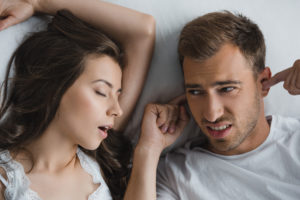

Not at 3 a.m., and not in the middle of an argument. Choose a calm time when you’re both rested, like a weekend morning or a relaxed evening.
2. Lead with concern, not complaint
“Your snoring is driving me crazy” puts someone on the defensive. Try something like: “I’ve noticed you stop breathing for a few seconds at night, and it worries me. Can we get it checked out?”
3. Be specific about what you’ve seen
Vague complaints are easy to wave away. Concrete details are harder to dismiss: how often it happens, whether you’ve heard gasping or choking, and how tired they seem during the day.
4. Record it
A short audio or video recording may help your partner understand what you’ve been hearing or seeing. Bring it to the appointment if you’d like, but remember that a recording cannot diagnose sleep apnea.
5. Frame it as a health check, not blame
The goal is answers, not fault. Remind them that plenty of people have sleep apnea and that it’s very treatable.
6. Offer to help with the first step
Sometimes the hardest part is making the call. Offer to look up options together, sit next to them while they book, or go along to the appointment for moral support.
What If They Brush It Off?
Expect some pushback. Common reactions include:
- “I don’t snore that loudly.” They truly can’t tell. This is where a recording helps.
- “I feel fine.” Many people adapt to being tired and forget what truly rested feels like.
- “I don’t want to wear a CPAP machine.” This one is very common, and it stops many people from getting checked at all. But getting tested doesn’t commit you to any particular treatment, and there are CPAP alternatives that may be worth discussing.
Be patient. If the first conversation doesn’t land, try again in a week or two, ideally with the recording in hand. You can’t force someone to see a provider, but steady, kind persistence often works.
When Should Snoring Be Checked by a Doctor?

Occasional snoring doesn’t necessarily mean your partner has sleep apnea. But it’s worth getting evaluated if snoring happens most nights, is accompanied by gasping or choking, you notice repeated pauses in breathing, or your partner has significant daytime sleepiness, morning headaches, or other symptoms associated with sleep apnea.
What Happens Next: Getting Answers in McKinney
If your partner is ready, the first step is simpler than most people expect.
- A home sleep test. Rather than spending a night in a sleep lab, your partner can complete a home sleep apnea test in their own bed. It shows whether their breathing is being interrupted and how significantly.
- A free consultation. Dr. Lawrence offers a free sleep apnea consultation that is purely informational, with no obligation to start treatment. If your partner has already had a sleep study, they should bring the results. You can see exactly what happens during a sleep apnea consultation so there are no surprises.
- Treatment options that fit. Depending on the results, options may include oral appliance therapy, VIVOS therapy, or laser snore therapy. The right choice depends on the diagnosis and your partner’s health, and Dr. Lawrence will be straightforward about what makes sense. He also works alongside patients’ medical doctors and sleep physicians as part of a broader health plan.
Better Nights Can Start With One Conversation
Everyone deserves quiet, restful sleep, and so does the person next to you. If your partner’s snoring has you worried or just worn out, you don’t have to keep suffering in silence or from the guest room.
SleepRight McKinney welcomes couples from Allen, Frisco, Plano, and Prosper. Call our McKinney sleep apnea office at 972-542-8400 to schedule a free consultation with Dr. Lawrence, or contact us online.