


Sleep Apnea and Drowsy Driving: What McKinney Commuters Should Know

Have You Ever Caught Yourself Nodding Off at the Wheel?
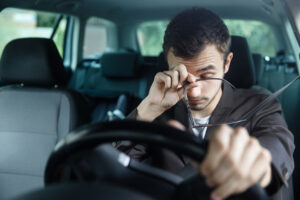
You’re a few miles from home on the drive back from work. Your eyelids feel heavy. You blink, and suddenly you can’t remember the last stretch of road. Maybe you’ve jerked awake as your tires touched the rumble strip, or felt your head drop at a red light.
Most of us chalk it up to a late night, a long week, or too little coffee. But if it keeps happening, especially when you’ve technically slept enough hours, it may point to something more than being tired. It can be a sign of obstructive sleep apnea, a condition that quietly steals your rest and puts you and everyone on the road with you at risk.
At SleepRight McKinney, Dr. Paul Lawrence helps drivers across McKinney, Allen, Frisco, Plano, and Prosper get real answers about sleep apnea and treat it with CPAP alternatives.
Drowsy Driving Is More Common Than Most People Think
We tend to think of dangerous driving as drunk or distracted driving. Drowsy driving belongs on that list.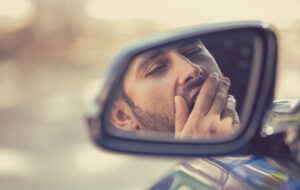
The National Highway Traffic Safety Administration (NHTSA) estimated that about 91,000 police-reported crashes in 2017 involved drowsy drivers, resulting in roughly 50,000 injuries and nearly 800 deaths. But NHTSA and safety researchers agree those numbers are almost certainly too low, because it’s hard to prove after a crash that a driver was drowsy. A study from the AAA Foundation for Traffic Safety estimated that around 17.6 percent of fatal crashes between 2017 and 2021 involved a drowsy driver, which works out to nearly 30,000 deaths over those five years.
NHTSA also notes that drowsy-driving crashes tend to peak in two windows: between midnight and 6 a.m., and in the late afternoon. That second window is the drive home from work, which is exactly when many McKinney commuters are heading down US-75 or the Sam Rayburn Tollway after a long day.
Why Sleep Apnea Makes Drowsy Driving More Likely
Obstructive sleep apnea happens when your airway repeatedly narrows or collapses during sleep. Each episode can restrict or stop airflow, sometimes lowering blood oxygen levels and causing brief arousals from sleep as the body works to restore normal breathing. These disruptions can happen repeatedly throughout the night without you fully waking or remembering them.
The result: you can spend eight hours in bed and still wake up exhausted. That kind of unrefreshing sleep leads to daytime sleepiness, slower reaction times, and trouble concentrating, which are three things you can’t afford behind the wheel.
The research reflects this:
- A study reported by the American Academy of Sleep Medicine found that people with sleep apnea were nearly 2.5 times more likely to be the driver in a motor vehicle accident than other drivers in the general population.
- A large study of commercial truck drivers found that drivers with OSA who did not adhere to their prescribed treatment had about five times the risk of serious, preventable crashes compared with control and treatment-adherent drivers.”
It’s worth keeping this in perspective. Most people with sleep apnea don’t crash, and the risk varies from person to person. But it’s a real, measurable increase, and it’s one you can do something about.
Warning Signs to Watch for Behind the Wheel
Pay attention if you regularly experience any of these while driving:
- Heavy eyelids or frequent, uncontrollable yawning
- Drifting out of your lane or hitting the rumble strip
- Missing exits or turns you know well
- Not remembering the last few miles you drove
- Jerking awake or catching your head nodding
- Dozing off at red lights or in stop-and-go traffic
- Needing to crank the AC or blast the radio just to stay alert
Then there’s the risk you can’t feel: microsleeps. Microsleeps are very brief episodes of involuntary sleep or reduced awareness that can last just a few seconds. At 65 mph, a car covers about 95 feet every second. A four-second microsleep means driving roughly 380 feet, longer than a football field, without anyone in control.
Signs That It Might Be Sleep Apnea, Not Just Being Tired
Being tired after a rough night is normal. Sleep apnea tends to show up as a pattern. Beyond drowsiness on the road, look for:
- Loud, frequent snoring
- Gasping, choking, or pauses in breathing that a partner has noticed
- Morning headaches or a dry mouth when you wake up
- Constant fatigue no matter how long you sleep

- Trouble concentrating or memory lapses
- Irritability or low mood
Some people with sleep apnea don’t realize how impaired they are, because they’ve adapted to feeling tired over months or years. If the signs sound familiar, don’t rely on how you feel. Get tested.
What to Do If You’re Drowsy Right Now
If you’re fighting to stay awake while driving, pull over somewhere safe, turn on your hazard lights, and rest before continuing. Turning up the radio or rolling down the window won’t fix the problem.
If you’re fighting to stay awake while driving, do not try to push through it. Pull over somewhere safe and stop driving until you’re sufficiently rested. If it’s happening regularly, treat it as a health issue rather than a quirk of your schedule.
Treating Sleep Apnea Can Make the Road Safer
The encouraging news is that treating sleep apnea can reduce the factors that contribute to drowsy driving. In one study, motor vehicle accidents among patients using CPAP for an average of at least four hours per night were reduced by about 70%.
That research focused on CPAP, which remains an important treatment for many people, particularly those with severe sleep apnea. But CPAP isn’t the only option, and it only works if you use it. Many people find the mask hard to tolerate and stop using it, which is why a good alternative matters. The appropriate treatment depends on your diagnosis, severity, health history, and ability to use the treatment consistently.
At SleepRight McKinney, that starts with getting answers:
- Get tested. If you haven’t had a sleep study, we offer home sleep apnea testing, so you can be evaluated in your own bed instead of overnight at a lab.
- Book a free consultation. Dr. Lawrence’s free sleep apnea consultation is informational only, with no obligation. Here’s what happens during a consultation so you know what to expect.


- Explore options that fit. Depending on your results, options may include oral appliance therapy or VIVOS therapy. Dr. Lawrence can explain whether an oral appliance may be appropriate for your diagnosis and severity, or whether CPAP or another treatment should be considered.
- Stay connected to your doctor. When appropriate, SleepRight can coordinate with your medical doctor or sleep physician as part of your sleep-apnea care.
If you drive for a living, it’s also worth talking with your employer and your medical examiner about any sleep apnea screening or requirements that apply to your job.
Don’t Wait for a Close Call
Sleep apnea is common, treatable, and easy to overlook. The sooner you get answers, the sooner you can feel alert during the day and safer on the road for yourself and your family.
SleepRight McKinney welcomes patients from Allen, Frisco, Plano, and Prosper. Call our McKinney sleep apnea office at 972-542-8400 to schedule your free consultation with Dr. Lawrence, or contact us online.
Sources: NHTSA: Drowsy Driving · AAA Foundation for Traffic Safety: Drowsy Driving in Fatal Crashes, 2017–2021· American Academy of Sleep Medicine: Risk of motor vehicle accidents is higher in people with sleep apnea · University of Minnesota CTS: Study finds higher crash risk for truckers with untreated sleep apnea